
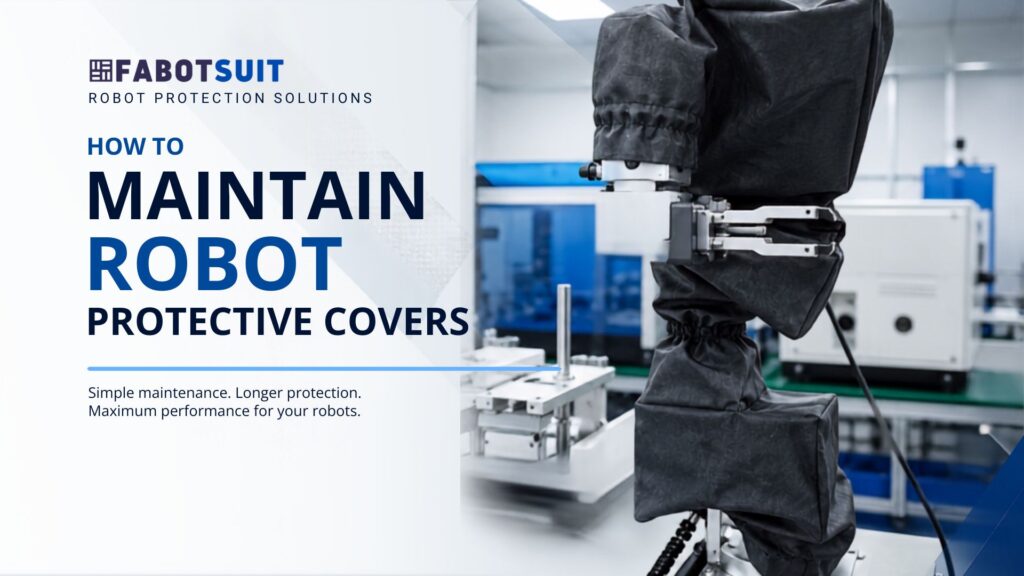
How to Maintain Robot Protective Covers for Longer Service Life | FABOTSUIT®
A robot protective cover is designed to shield industrial robots from dust, oil, chemicals, paint overspray, welding spatter, water, and other harsh manufacturing conditions. Like any protective equipment, however, it requires regular inspection and maintenance to ensure long-term performance.
Proper maintenance not only extends the life of the protective cover itself but also helps maintain consistent protection for the robot, reducing contamination and minimizing unnecessary downtime.
Why Maintenance Matters
Over time, robot protective covers are continuously exposed to harsh operating environments. Dust accumulation, chemical residues, oil, heat, and repeated robot movement can gradually affect the cover’s performance if left unchecked.
Routine maintenance helps:
- Maintain effective protection
- Reduce contamination build-up
- Detect wear before failure occurs
- Extend the cover’s service life
- Improve maintenance efficiency
- Reduce unexpected production interruptions
1. Perform Regular Visual Inspections
The simplest way to prevent unexpected problems is through routine visual inspection.
Check for:
- Tears or punctures
- Abrasion marks
- Burn damage
- Loose stitching
- Damaged fasteners
- Worn elastic sections
- Deformation around robot joints
Any damage should be evaluated before it allows contaminants to reach the robot.
2. Clean the Cover Regularly
The cleaning method depends on the application and type of contamination.
Examples include:
- Dust: Use compressed air or a soft brush.
- Oil and coolant: Wipe with a clean cloth and an appropriate cleaning solution.
- Paint overspray: Remove before excessive build-up occurs.
- Chemical residue: Follow the chemical manufacturer’s cleaning recommendations.
- Food applications: Follow the plant’s hygiene procedures.
Avoid allowing contaminants to accumulate for extended periods, as this may shorten the service life of the cover.
3. Inspect High-Movement Areas
Robot joints experience continuous movement during operation.
Pay particular attention to:
- Shoulder joints
- Elbow joints
- Wrist joints
- Folded sections
- Flexible connection areas
These locations typically experience the highest mechanical stress and should be inspected more frequently.
4. Check Fasteners and Attachment Points
Ensure that:
- Zippers operate smoothly
- Hook-and-loop fasteners remain secure
- Buckles are undamaged
- Straps remain properly adjusted
- Attachment points are firmly secured
Loose attachment points can affect both protection performance and cover durability.
5. Never Ignore Small Damage
Small tears can quickly become larger during robot movement.
Repair or replace damaged sections as soon as practical to prevent contaminants from reaching the robot.
Early intervention is usually less costly than replacing an entire protective cover.
6. Remove the Cover Correctly During Maintenance
When servicing the robot:
- Follow the recommended removal procedure.
- Avoid pulling excessively on high-stress areas.
- Protect the cover from sharp tools or metal edges.
- Store removed covers in a clean, dry location.
Improper handling during maintenance can shorten the cover’s service life.
7. Store the Cover Properly
If a protective cover is removed for an extended period:
- Store it indoors.
- Keep it clean and dry.
- Avoid prolonged exposure to direct sunlight.
- Do not place heavy objects on top of the cover.
- Avoid folding it sharply unless recommended.
Proper storage helps preserve the cover’s shape and protective performance.
8. Establish a Preventive Maintenance Schedule
Robot protective covers should be included in the facility’s preventive maintenance (PM) program.
Typical inspection intervals may be based on:
- Operating hours
- Production cycles
- Cleaning schedules
- Environmental severity
- Maintenance shutdown periods
Routine inspection allows potential issues to be identified before they affect production.
Signs That a Robot Protective Cover Should Be Replaced
Consider replacement if the cover shows:
- Significant tearing
- Heat damage
- Permanent deformation
- Excessive abrasion
- Failed stitching
- Damaged closures
- Reduced protection performance
Replacing a worn cover before complete failure helps maintain consistent protection for the robot.
How FABOTSUIT® Supports Long-Term Performance
FABOTSUIT® is designed not only for protection but also for practical maintenance.
Every solution is engineered with consideration for:
- Easy installation and removal
- Maintenance accessibility
- Robot motion
- Cable routing
- Operating environment
- Long-term durability
- Serviceability
Rather than supplying a standard cover, FABOTSUIT® provides a custom-engineered robot protection solution designed to perform reliably throughout the robot’s operating life.
Conclusion
Maintaining a robot protective cover is an important part of protecting your automation investment.
Regular inspection, proper cleaning, and timely replacement help ensure that both the protective cover and the robot continue operating reliably in demanding manufacturing environments.
With proper maintenance, a robot protection solution can provide consistent performance while helping reduce contamination, maintenance effort, and unexpected downtime.
Need Assistance with Your Robot Protection Solution?
If you’re unsure whether your existing cover is suitable for your application or needs replacement, the FABOTSUIT® engineering team can help evaluate your robot, operating environment, and protection requirements.
